Pages

Pages

Sunday, November 27, 2016

Temu retires, his CFO becomes Swissport CEO

Mr Mrisho Yassin 
SWISSPORT Tanzania has a new Chief Executive Officer Mr Mrisho Yassin, replacing Gaudence Temu who served the firm for 26 years.

Before his appointment, Mr Yassin served as Swissport’s Chief Financial Officer after climbing some ladders from Chief Internal Auditor.

Mr Yassin also works with Ernst&Young and KPMG.
The outgoing CEO, Mr Temu, will officially retire on December 1st after working with Swissport for 26 years of which 22 years as CEO. Swissport is a ground handling firm and listed at Dar es Salaam Stock Exchange.

There’s enough liquidity: BoT chief

Prof. Benno Ndulu-BoT Governor
  •      In a speech at a bankers’ meeting here, Prof Ndulu said there was a vast amount of liquidity (cash) outside the banking system that was enough to enable banks to fulfil their role of “greasing” the growth of the private sector, which is the engine of the Tanzanian economy.

Arusha. Bank of Tanzania governor Benno Ndulu yesterday advised bankers to work harder and attract deposits from customers and potential customers instead of depending excessively on public sector deposits.
In a speech at a bankers’ meeting here, Prof Ndulu said there was a vast amount of liquidity (cash) outside the banking system that was enough to enable banks to fulfil their role of “greasing” the growth of the private sector, which is the engine of the Tanzanian economy.
“Six out of every ten shillings held in cash is outside the banking system. Deposit drive would tap into that resource base for lending to those in need of credit and reduce the current excessive dependence on public sector deposits,” Prof Ndulu said yesterday.
He revealed that Sh700 billion is still held by government agencies and institutions as deposits in the commercial banking system, accounting for three per cent of total deposits. About Sh500 billion, which had been deposited by public institutions in the long-term basis was removed from the banking system between January and May this year by the order of President John Magufuli, who also said that only the money needed for recurrent expenditure was to remain in the banking system.
Prof Ndulu’s advice to banks yesterday comes at a period when these institutions have reduced lending considerably, citing a liquidity crunch. Figures show that in the year ending September 2016, banks issued slightly more than a half of what they had issued to the private sector in the year that ended in September 2015.
Between October 2015 and September 2016 banks issued Sh1.7 trillion to the private sector as compared to Sh2.9 trillion the dished to the private sector between October 2014 and September 2015.
But it was the manufacturing sector that suffered much as the credit growth rate declined to -7.9 per cent by September, from 20.7 in the same period last year.
Prof Ndulu told bankers to also strive to attract long terms deposits from customers savings to “support lengthening maturity of loans to investors and help to reduce the burden of debt servicing associated with maturity mismatch between short term deposits and investment credit.”
By September this year there was a total of Sh22.2 trillion in the economy (including foreign currency deposits in banks), according to the Monthly Economic Review report of the BoT.
In the 12 months to September 2016, only about Sh913 billion wa injected into the economy (an annual growth of 4.3 per cent) as compared to Sh3 trillion that was injected into the economy in the 12 months to September 2015 (an annual growth of 16.5 per cent), the BoT report shows.
Harnessing Tanzania’s Geographical Advantage: The Role of the Financial Sector was the theme of yesterday’s meeting, which is held every two years.

Sunday, November 20, 2016

Etihad Cargo expands freighter services in Europe

An Etihad Cargo Boeing 777 freighter
Etihad Cargo, the freight division of Etihad Airways, has announced three new freighter services from Europe.
Last month Etihad Cargo started operating Boeing 777 freighters from East Midlands and Stansted airports in the UK and from Copenhagen in Denmark. 
David Kerr, Senior Vice President of Etihad Cargo, said: “We have responded to our customers’ demand for freighter capacity out of Europe, and our freighter fleet gives us the flexibility of deploying capacity when and where it is required.
“These three new services will connect producers with consumers halfway around the world. Manufacturers in the UK and Denmark can now get their merchandise to their customers in the Middle East even faster, in as little as 24 hours in some cases.”
                                                                                                             
Peter Krogsgaard, Chief Operations Officer of Copenhagen Airport, said: “We are very pleased that Etihad Cargo has set up operations at Copenhagen Airport. Air cargo is of major importance to the Danish business sector. In value terms, more than one third of Danish exports leave the country by air. Copenhagen is a strong Northern Europe hub for air cargo, and a fast growing international player such as Etihad Cargo will further strengthen our position in the market.” 
The new routes bring the number of freighter destinations in Europe to nine. Etihad Cargo already operates maindeck capacity from Amsterdam, Frankfurt (Frankfurt Main and Frankfurt-Hahn), Milan, Brussels and Zaragoza, as well as belly capacity on its passenger flights from the continent.
The European Union is one of the UAE’s biggest trading partners, with non-oil trade between the two totalling US$65 billion in 2015. In the same year the UAE was the eighth largest destination of European exports and the EU’s 13th largest trading partner overall.* 
Ends
About Etihad Aviation Group
Etihad Aviation Group (EAG) is a diversified global aviation and travel group comprising four business divisions – Etihad Airways, the national airline of the United Arab Emirates, Etihad Airways Engineering, Hala Group and Airline Equity Partners. The group has minority investments in seven airlines: airberlin, Air Serbia, Air Seychelles, Alitalia, Jet Airways, Virgin Australia, and Swiss-based Darwin Airline, trading as Etihad Regional.
From its Abu Dhabi base, Etihad Airways flies to, or has announced plans to serve, more than 110 passenger and cargo destinations in the Middle East, Africa, Europe, Asia, Australia and the Americas. The airline has a fleet of over 120 Airbus and Boeing aircraft, with 204 aircraft on firm order, including 71 Boeing 787s, 25 Boeing 777Xs, 62 Airbus A350s and 10 Airbus A380s. For more information, please visit: etihad.com
For more information contact:
Siobhan Bardet
Etihad Airways
Tel: + 971 2 511 1049
Email:   sbardet@etihad.ae

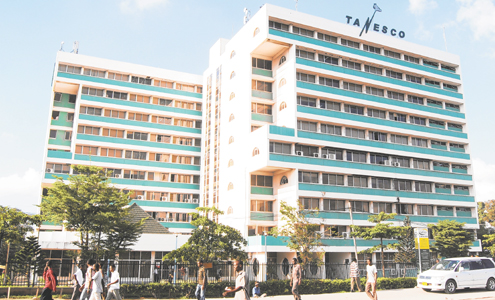
Tanesco told not to increase tariffs


In Summary

Stakeholders call on energy company to fulfil its promise of lowering power charges by 7.9 per cent come 2017
Mwanza. Stakeholders in the Lake Zone regions have opposed Tanesco’s proposal to raise energy cost by 18.19 per cent, only a few months after the charges were lowered by 1.1 per cent.
The stakeholders called on Tanesco to fulfil its promise of lowering the charges by 7.9 per cent come 2017.
Speaking during a meeting to collect views from the public Energy and Water Regulatory Authority (Ewura) Consumer Consultative Council chairman Jerry Mwasa advised the power firm to explore new sources of power in bid to reduce the charges. “Instead of pushing up charges, Tanesco should explore new sources of energy so as to relieve wananchi of the burden and spearhead industrial growth,” said Mr Mwasa.
Ewura CCC acting regional chairman Thomas Mnunguli advised the energy authority to reject Tanesco’s proposal on hiking the charges.
Another stakeholder, Mr Amani Mafura, said even if the cost of electricity production has increased, the power firm should raise charges gradually. He noted that raising power charges by over 18 per cent would increase the cost of living.
Earlier, Tanesco deputy managing director for Electric Supply Kahitwa Bishaija told the stakeholders that hiking energy charges would enable the company to afford production, transportation and distribution costs.
He said despite using natural gas by 58 per cent in 2016 from last year’s 47 per cent, and reducing oil usage by five per cent, the company still faces operation financial cost.
Mr Bishaija, the company’s debt has increased from Sh699.57 billion in December last year to Sh794.48 in September 2016.
He said Tanesco, which has increased production from 988 MHz in 2015 1, 041 MHz this year, with revenue increasing to Sh1, 042.5 billion in 2016 compared to last year’s Sh995.3 billion, is obliged to spend an average of 13 per cent of the monthly income to buy heavy oil to generate electricity.

According to him, new prices consider power generation, transmission, distribution costs per unit which is Sh155.35, Sh23.76 for transmission and Sh107.17 for distribution, thus making a total of Sh286.28 per unit, an increase of 18.19 percent compared to the current Sh242 .21.

Sunday, November 13, 2016

13 Tanzanians to benefit from entrepreneur’s $100 million


They were selected from over 45,000 applicants in 54 African countries after completing the programme’s innovative 12-week online training
Advertisement
Dar es Salaam. Thirteen Tanzanians are among 1,000 startup entrepreneurs from Africa who will benefit from the $100 million (Sh210 billion) from Tony Elumelu Foundation Entrepreneurship Programme (TEEP) this year, it was revealed recently.
The group was selected from over 45,000 applicants in 54 African countries after completing the programme’s innovative 12-week online training on entrepreneurship.
Launched in 2015, the programme - funded by United Bank for Africa Group Chairman Tony Elumelu seeks  to empower African entrepreneurs and create jobs.
 “We are proud to have established a unique platform for African entrepreneurs to build relationships and business partnerships. In doing so, we are creating a system that encourages innovation and collaboration,” TEEP founder Elumelu said at a recent gathering of African entrepreneurs that was held in Lagos, Nigeria.
He said the TEEF’s long-term investment in empowering African entrepreneurs is in fulfilling his philosophy of Africapitalism, which positions the continent’s private sector as the means for the social and economic development.
The gathering – christened the Tony Elumelu Forum (TEF) in which The Citizen also attended – also attracted leading policymakers and business leaders from across Africa who gave their support for the foundation and its promise to identify, train, mentor and seed entrepreneurs.
President of Sierra Leone Ernest Bai Koroma called on other business leaders to emulate Elumelu by empowering entrepreneurs and also through tackling the fundamental economic challenges confronting the continent. 

TBL for solar project to cut electricity spending


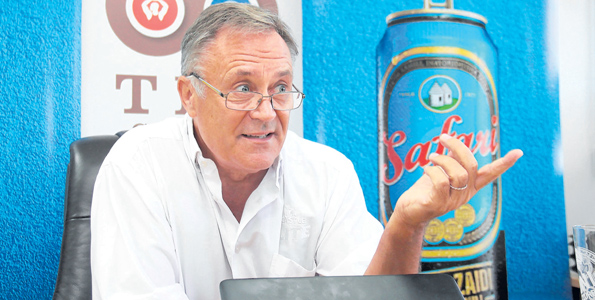
Dar es Salaam. Tanzania Breweries Limited (TBL) Group has injected $250,000 (about Sh545 million) into its newly-commissioned solar project in Mbeya Region as the beer brewer seeks to play an increasingly significant role in conserving the environment and reducing its spending on electricity.
The TBL Group technical director Gavin Van Wijk said in Dar es Salaam yesterday that the first phase of its solar project at its Mbeya Plant, which was commissioned a few days ago, would enable the company to reduce carbon emission by 130 tonnes per annum.
“This project has several benefits. For instance, the first phase of our Mbeya Plant Solar programme will cut carbon emission by 130 tonnes per year,” he said yesterday, noting that the volume was equivalent to six per cent of the beer maker’s carbon emission at the Mbeya Plant.
South Africa based Romanov Company has installed the 268,000 KiloWatt Hours per year system at TBL’s Mbeya Plant, helping the company to save $20,000 (about Sh44 million) from its annual electricity payments.
The payback period for the project, according to Mr VanWijk, is five years and the system’s lifespan is 15 years.
“This means that in five years, we will have recouped the money that has been injected into the project and have 10 more years of utilising the system before it expires,” he said, noting, however, that the most important aspect of the project was its emission cutting nature.
With the project, all refrigeration plants facilities at TBL’s Mbeya Plant are now run on solar energy.
Nevertheless, TBL Group is still investigating other solar technologies that could have a lower payback time as it ponders over embarking on the second phase of the project at its Mbeya Plant as well as rolling out a similar project to its Mwanza, Arusha and Dar es Salaam plants.
“For the Mbeya Plant,” said Mr Wijk, “the second phase of the project will include production of electricity to power air compressors, water boilers and other utilities, while the third phase will specifically target the brewing and packaging segments.”
He said he wished he could complete the whole project in five years, but it would depend on the availability of funds and the new technologies that might have better payback period,” he said

REAL ESTATE : Africa transforming land tenure to boost agriculture


It is another beautiful Saturday morning. Our Muslim friends are on the holy month of Ramadan, some of our Christian friends are off to church, some families are on their way to the beach and weekend gateways.
Others are reading this and yet there are those watching a television programme, while enjoying a cup of tea and our beloved president is bringing a renewed hope to our country, indeed life is beautiful.
However, today is different, in terms of what I want to share with you coming from a week of exhibition at the Dar Property Expo at Diamond Jubilee giving, free legal advice on real estate matters upon which we were blessed to be visited by the Minister for Lands, Housing and Human Settlements Development with whom we had interesting conversations about the land law and government impressive plans to do away with the “zombie” that torments land tenure. So, today I came across an article of which I think it’s an interesting read over how land tenure can be used to revolutionise agriculture and eradicate poverty. The full article can be found at www.worldbank.org.
It is indeed true that sub-Saharan Africa is home to nearly half of the world’s usable, uncultivated land, but so far the continent has not been able to develop these unused tracts, estimated at more than 202 million hectares, to dramatically reduce poverty and boost growth, jobs and shared prosperity.
According to a new World Bank report, “Securing Africa’s Land for Shared Prosperity,” released sometime this month, African countries and their communities could effectively end ‘land grabs,’ grow significantly more food across the region, and transform their development prospects if they can modernise the complex governance procedures that govern land ownership and management over the next decade. Africa has the highest poverty rate in the world with 47.5 per cent of the population living below $1.25 a day.
“Despite abundant land and mineral wealth, Africa remains poor,” says Makhtar Diop, World Bank vice president for Africa. “Improving land governance is vital for achieving rapid economic growth and translating it into significantly less poverty and more opportunity for Africans, including women, who make up 70 per cent of Africa’s farmers yet are locked out of land ownership due to customary laws. The status quo is unacceptable and must change so that all Africans can benefit from their land.”
The report notes that more than 90 per cent of Africa’s rural land is undocumented, making it highly vulnerable to land grabbing and expropriation with poor compensation. However, based on encouraging evidence from country pilots in African countries such as Ghana, Malawi, Mozambique, Tanzania and Uganda, Securing Africa’s Land for Shared Prosperity suggests an action plan that could help revolutionise agricultural production, end land grabbing, and eradicate extreme poverty in Africa.
Now on the most interesting part is on what the report suggest. The report is of the opinion that the following has to be done:
1. Regularising tenure rights of squatters on public land in urban slums that are home to 60 per cent of urban dwellers in Africa.
2. Championing reforms and investments to document all communal lands and prime lands that are individually owned.
3. Tackling the weak governance and corruption endemic to the land governance system in many African countries, which often favour the status quo and harm the interests of poor people.
4. Generating the political will of African governments to mobilise behind these land reforms and attract the political and financial buy-in of the international development community.
The new report says it would cost African countries and their development partners, including the private sector, $4.5 billion spread over 10 years to scale up these policy reforms and investments.
Surging food commodity prices and foreign direct investment have increased the potential return on investing in effective land administration through higher agricultural yields and better market access and prices. Most African countries already have the basic land laws in place that recognise customary land rights and gender equality, which are essential to reinforce needed reforms.
In addition, new satellite and information technologies can greatly reduce the cost of land administration.
With only 10 per cent of Africa’s rural land registered, inefficient land administration means that it takes twice as long and costs twice as much to transfer land compared to industrialised countries, and weak governance is the leading cause for corruption in the land sector.
The report notes successful examples of how African governments have undertaken tough reforms, enacted laws and implemented progressive land policies that have benefited poor communities. Highlighting the need for greater capacity, the report finds that Ghana, Kenya and Uganda each have fewer than 10 professional land surveyors per one million people, compared to 197 in Malaysia and 150 in Sri Lanka. This is so for Tanzania as well. Of Kenya’s 206 registered land surveyors, only 85 were found to be practicing. The report points to the futility of building capacity without making complementary investments in land administration.
Africa has a huge vast land and potential to be the feeder of this world’s population. Our governments have done, but have to do more perhaps for countries, like Tanzania, think of re-writing all the land laws to better enhance land tenure, land transfer and land use. As the report suggest, this and the other three mentioned above can indeed help eradicate poverty and revolutionise the agricultural sector.