Pages

Pages

Monday, July 31, 2017

CRDB saluted for aiding Zanzibar’s economic drive


Zanzibar President Ali Mohamed Shein has said the country needs large and strong banks in order to spur the economic development agenda to the next level.
Banks are also supposed to be innovative by coming up with various local solutions for problems with a bearing on the welfare of rural communities.
“Banks are important in speeding up economic activities, especially by empowering the unbankable population,” Dr Shein said when opening the Chake Chake branch of the CRDB Bank in Pemba.
CRDB becomes the fourth player in Pemba, an archipelago of Zanzibar. Others are TPB Bank, NMB and People’s Bank of Zanzibar. Dr Shein said for instance, that banks like CRDB, which had a strong vision on micro financing, would assist small and medium investors in rural Pemba to access credit and expand their businesses.
“I am pleased to hear that you are now working closely with the Ministry of Industry, Trade and Marketing to develop small factories for seaweed and salt harvesting. “I also ask you (CRDB) to throw your weight behind clove farmers, since the Isles government wants to revive the crop in a big way,” Dr Shein said when addressing the audience at the bank’s inaugural ceremony.
The revolutionary government is offering good prices for Grade One dried cloves, of 14,000/- a kilogramme, compared to 2,200/- four years ago. Ambassador Amina Salim Ali, the Minister of Industry, Trade and Marketing, said more cloves would be bought during the season that has just started than in the previous one, because the higher prices had motivated farmers to increase yields.
“We needs banks like CRDB to chip in and assist us through loans and a simple platform for farmers’ payments,” the ambassador said. During the last season, 2500 tonnes of cloves were bought at an average price of 8,700/ a kilogram.
The government was also eager to empower fishermen through provision of motorpowered fishing boats that in an ambitious project that was launched early this year.
“A boat construction yard will be created in Unguja to build the boats. We want fisherman to go further in high seas where the catch is considerably big,” Ambassador Amina said.
CRDB Chairman Ally Hussein Laay said the bank opened the Pemba branch to foster economic growth of the people and the island as a whole. “The bank sets to address the challenges small and medium investors are facing, especially in accessing loans… we are planning to introduce Islamic banking as well,” Mr Laay said.
CRDB Managing Director Dr Charles Kimei said the bank was behind Dr Shein’s endeavour to uplift rural the economic status of the communities, and spur economic development.
“The agricultural sector is top on our loan portfolio… we will continue to lend farmers despite others running away from the field saying it was too risky area to venture into,” Dr Kimei assured the President.
CRDB had issued loans totalling 3.3tri/- by the end of June in various fields, including agriculture, construction, trade, industry, fisheries and Saccos.


Friday, July 28, 2017

Jeff Bezos now world's richest person


1: Jeff Bezos of Amazon has unseated fellow tech billionaire Bill Gates as the richest person in the world, profiting from the e-commerce company's meteoric stock rise to reach a fortune of $90.6 billion, Forbes reported. REUTERS/Mike Segar

Jeff Bezos Biography


QUOTES
“We will need to invent, which means we will need to experiment. Our touchstone will be readers, understanding what they care about—government, local leaders, restaurant openings, scout troops, businesses, charities, governors, sports—and working backwards from there. I'm excited and optimistic about the opportunity for invention. [On the future of 'The Washington Post.']”
—Jeff Bezos

American entrepreneur Jeff Bezos is the founder and chief executive officer of Amazon.com. In 2013, he purchased 'The Washington Post.'
Who Is Jeff Bezos? 
Entrepreneur and e-commerce pioneer Jeff Bezos was born on January 12, 1964, in Albuquerque, New Mexico. Bezos had an early love of computers and studied computer science and electrical engineering at Princeton University. After graduation he worked on Wall Street, and in 1990 he became the youngest senior vice president at the investment firm D.E. Shaw. Four years later, he quit his lucrative job to open Amazon.com, a virtual bookstore that became one of the internet's biggest success stories. In 2013, Bezos purchased The Washington Post in a $250 million deal. In 2017, he became the richest person in the world, surpassing Microsoft founder Bill Gates, with a net worth topping $90 billion. 
Early Life and Career
Jeff Bezos was born on January 12, 1964, in Albuquerque, New Mexico, to a teenage mother, Jacklyn Gise Jorgensen, and his biological father, Ted Jorgensen. The Jorgensens were married less than a year, and when Bezos was 4 years old his mother re-married, to Cuban immigrant Mike Bezos.
As a child, Jeff Bezos showed an early interest in how things work, turning his parents' garage into a laboratory and rigging electrical contraptions around his house. He moved to Miami with his family as a teenager, where he developed a love for computers and graduated valedictorian of his high school. It was during high school that he started his first business, the Dream Institute, an educational summer camp for fourth, fifth and sixth graders.
Bezos pursued his interest in computers at Princeton University, where he graduated summa cum laude in 1986 with a degree in computer science and electrical engineering. After graduation, he found work at several firms on Wall Street, including Fitel, Bankers Trust and the investment firm D.E. Shaw. It was there he met his wife, Mackenzie, and became the company's youngest vice president in 1990. 
While his career in finance was extremely lucrative, Bezos chose to make a risky move into the nascent world of e-commerce. He quit his job in 1994, moved to Seattle and targeted the untapped potential of the internet market by opening an online bookstore.
Launching Amazon.com
Bezos set up the office for his fledgling company in his garage where, along with a few employees, he began developing software. They expanded operations into a two-bedroom house, equipped with three Sun Microstations, and eventually developed a test site. After inviting 300 friends to beta test the site, Bezos opened Amazon.com, named after the meandering South American River, on July 16, 1995.
The initial success of the company was meteoric. With no press promotion, Amazon.com sold books across the United States and in 45 foreign countries within 30 days. In two months, sales reached $20,000 a week, growing faster than Bezos and his start-up team had envisioned. 
Amazon.com went public in 1997, leading many market analysts to question whether the company could hold its own when traditional retailers launched their own e-commerce sites. Two years later, the start-up not only kept up, but also outpaced competitors, becoming an e-commerce leader.
Bezos continued to diversify Amazon’s offerings with the sale of CDs and videos in 1998, and later clothes, electronics, toys and more through major retail partnerships. While many dot.coms of the early '90s went bust, Amazon flourished with yearly sales that jumped from $510,000 in 1995 to over $17 billion in 2011.
In 2006, Amazon.com launched its video on demand service; initially known as Amazon Unbox on TiVo, it was eventually rebranded as Amazon Instant Video. In 2007, the company released the Kindle, a handheld digital book reader that allowed users to buy, download, read and store their book selections. That same year, Bezos announced his investment in Blue Origin, a Seattle-based aerospace company that develops technologies to offer space travel to paying customers.
Bezos entered Amazon into the tablet marketplace with the unveiling of the Kindle Fire in 2011. The following September, he announced the new Kindle Fire HD, the company's next generation tablet designed to give Apple's iPad a run for its money. "We haven't built the best tablet at a certain price. We have built the best tablet at any price," Bezos said, according to ABC News.
Buying 'The Washington Post'
Bezos made headlines worldwide on August 5, 2013, when he purchased The Washington Post and other publications affiliated with its parent company, The Washington Post Co., for $250 million. The deal marked the end of the four-generation reign over The Post Co. by the Graham family, which included Donald E. Graham, the company's chairman and chief executive, and his niece, Post publisher Katharine Weymouth.
"The Post could have survived under the company's ownership and been profitable for the foreseeable future," Graham stated, in an effort to explain the transaction. "But we wanted to do more than survive. I'm not saying this guarantees success, but it gives us a much greater chance of success."
In a statement to Post employees on August 5, Bezos wrote: "The values of The Post do not need changing. ...There will, of course, be change at The Post over the coming years. That's essential and would have happened with or without new ownership. The internet is transforming almost every element of the news business: shortening news cycles, eroding long-reliable revenue sources, and enabling new kinds of competition, some of which bear little or no news-gathering costs. There is no map, and charting a path ahead will not be easy. We will need to invent, which means we will need to experiment. Our touchstone will be readers, understanding what they care about—government, local leaders, restaurant openings, scout troops, businesses, charities, governors, sports—and working backwards from there. I'm excited and optimistic about the opportunity for invention."
'Richest Person in the World'
In early December 2013, Bezos made headlines when he revealed a new, experimental initiative by Amazon, called "Amazon Prime Air," using drones—remote-controlled machines that can perform an array of human tasks—to provide delivery services to customers. According to Bezos, these drones are able to carry items weighing up to five pounds, and are capable of traveling within a 10-mile distance of the company's distribution center. He also stated that Prime Air could become a reality within as little as four or five years.
Bezos oversaw one of Amazon's few major missteps when the company launched the Fire Phone in 2014; criticized for being too gimmicky, it was discontinued the following year. However, Bezos did score a victory with the development of original content through Amazon Studios. After premiering several new programs in 2013, Amazon hit it big in 2014 with the critically acclaimed Transparent and Mozart in the Jungle. In 2015, the company produced and released Spike Lee's Chi-Raq as its first original feature film.
In 2016, Bezos stepped in front of the camera for a cameo appearance playing an alien in Star Trek Beyond. A Star Trek fan since childhood, Bezos is listed as a Starfleet Official in the movie credits on IMDb.
On July 27, 2017, Bezos surpassed Microsoft founder Bill Gates to become the richest person in the world, according to Bloomberg. Gates, who was the richest person in the world since 2013, made $90.7 billion, shy of Bezos' worth of $90.9 billion, which rose with a surge in Amazon.com Inc. shares. 
 
Citation; https://www.biography.com/people/jeff-bezos-9542209

MS-13 gang members behind bars

MS-13

Mara Salvatrucha (MS-13) gang members wait to be escorted upon their arrival at the maximum-security jail in Zacatecoluca, El Salvador, June 22, 2017.

National strike in Venezuela

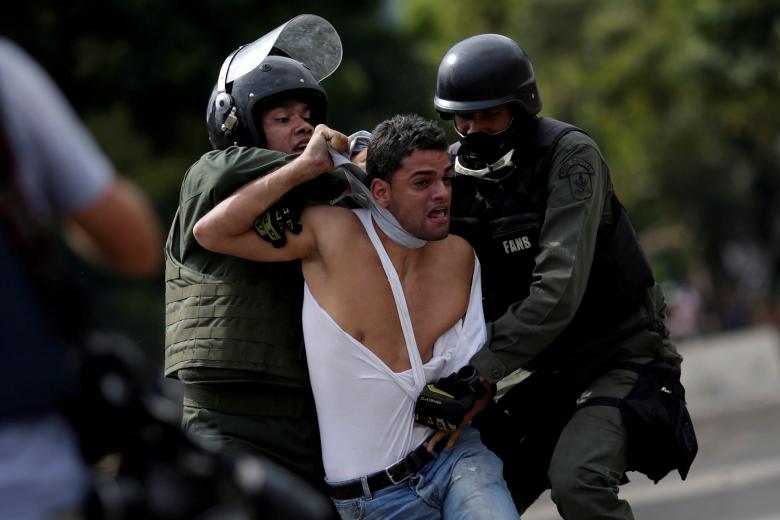
A demonstrator is detained at a rally during a strike called to protest against Venezuelan President Nicolas Maduro's government in Caracas, Venezuela.

Thursday, July 27, 2017

Trump's transgender military ban 'not worked out yet'


The White House has not yet decided how it will implement the president's ban on transgender people serving in the US military.
Mr Trump's surprise Twitter announcement on Wednesday has been met with criticism from rights groups.
Spokeswoman Sarah Sanders said the administration would work alongside the Pentagon to decide how to proceed.
It is not yet clear how the announcement will affect current transgender service personnel.
Why was the ban introduced?
"The United States government will not accept or allow transgender individuals to serve in any capacity in the US military," Donald Trump tweeted.
"Our military must be focused on decisive and overwhelming victory and cannot be burdened with the tremendous medical costs and disruption that transgender in the military would entail."
Asked at a press briefing if troops on battlefields would be immediately sent back, White House spokeswoman Sarah Sanders said the policy had yet to be worked out.
"The decision is based on a military decision. It's not meant to be anything more than that," she said.
However, some US media outlets questioned the spending justification. The Washington Post drew attention to an analysis that the US military spends almost $42m (£32m) a year on the erectile dysfunction medication Viagra - several times the total estimated cost of transgender medical support.
Meanwhile, Politico reports that the move was prompted by threats from Republican hardliners over a spending bill which would provide funding for Mr Trump's promised military spending and border wall plans.
One Republican lawmaker had already tabled an amendment to the spending bill to prevent the military paying for transgender surgical procedures.

Why has the president decided on this now?
Anthony Zurcher, BBC North America Reporter
Different stance - on the campaign trail last year

The timing of this transgender ban is almost as interesting as the move itself.
Why now? With the Trump administration being buffeted by the Jeff Sessions political death watch, the ongoing multi-prong investigation into the Trump campaign, the healthcare drama in the Senate and the impending Russian sanctions bill, perhaps the administration decided this was a good time to change the subject and rally conservative forces to his side.
Republicans have long used cultural issues as a wedge to divide Democrats and energise evangelicals. As one White House insider acknowledged, this is straight out of that playbook.
While Mr Trump campaigned as sympathetic to LGBT rights, he needs the traditional religious conservatives to stay loyal to him now, more than ever.
The president's action will create a furore among liberals and the media commentators whose disdain for the current administration is not a new development. This is a fight the White House will welcome.

What is the status of transgender service personnel?
The decision to allow transgender people to serve openly in the military was made by the Obama administration last year, with a one-year review period allowed for its implementation.
The policy included a provision for the military to provide medical help for service members wanting to change gender.
But in June, Defence Secretary James Mattis agreed to a further six-month delay.
In 2016, the independent Rand Corporation estimated that about 4,000 US active-duty and reserve service members are transgender, although some campaigners put the figure higher than 10,000.
Rand also predicted that the inclusion of transgender people in the military would lead to a 0.13% increase in healthcare spending (approximately $8.4m).
What do affected personnel say?
Kristin Beck, a retired elite Navy SEAL, issued a challenge to President Trump in an interview with Business Insider: "Let's meet face to face and you tell me I'm not worthy."
She said that during her decorated military career, she had been "defending individual liberty".
"Being transgender doesn't affect anyone else," she said. "We are liberty's light. If you can't defend that for everyone that's an American citizen, that's not right."
Chelsea Manning, a transgender former US soldier, tweeted her reaction to the news
Army reservist Rudy Akbarian, in Los Angeles, said: "My heart dropped a little bit, you know. It hurt."
"Not everyone responded well after learning I was transitioning," he said. "But after spending time on missions and realising we all share the same love for the country, we worked together and got the job done.
"The discrimination I'm facing now is from those outside the military - not the people who work with me."
What is the reaction from defence professionals?
Mr Trump said his decision was based on consultation with his generals, but there has been a mixed reaction.
Former Defence Secretary Ash Carter, who lifted the ban last year under President Obama, said: "To choose service members on other grounds than military qualifications is social policy and has no place in our military."
Chairman of the Senate Armed Services Committee, Republican John McCain, said major policy announcements should not be made via Twitter.
"Any American who meets current medical and readiness standards should be allowed to continue serving," he added.
Several British military generals also condemned Mr Trump's decision, including the commander of the UK Maritime Forces, Rear Admiral Alex Burton, who said "I am so glad we are not going this way."
What about those in favour?
"Each dollar needs to be spent to address threats facing our nation," Congresswoman Vicky Hartzler, a long-time opponent of the Obama administration's position, said in a statement.
"The costs incurred by funding transgender surgeries and the required additional care it demands should not be the focus of our military resources," she said.
Trump supporter and political commentator Scott Presler is among those who disagree with the military carrying the cost of such interventions.
While disagreeing with the ban, he added that "generals know more about war than I do."
"I don't think this is an attack on the LGBT community ... I'm mixed, but I have confidence in the guidance that President Trump is receiving," he said.
"I don't think for a second he's prejudiced."


DC orders arrest of Teacher, parents over impregnated girls


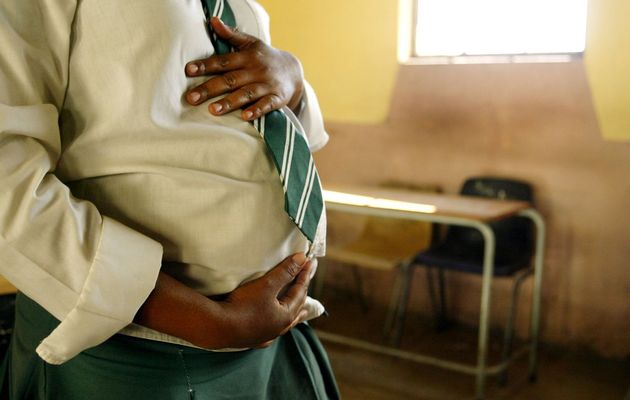
(TANZANIA-Nkasi) District Commissioner (DC) Said Mtanda has ordered the arrest of Mwai Primary School Head teacher and six parents over their alleged collusion to marry off three school girls.

Chinese police detain 'female Jesus cult' members


The cult's website contains extensive propaganda material
Police in China have detained 18 suspected members of a banned religious cult, state news agency Xinhua said.
The group is notorious for some of its members beating a woman to death in a McDonald's restaurant in 2014 after she refused to give them her phone number.
The Church of Almighty God cult was started in the 1990s and claims Jesus was resurrected as a woman in China.
Chinese authorities frequently crack down on the cult, having arrested many of its members over the years.
As part of the current detention, police also confiscated computers and books used by the cult for recruitment.
The Church of Almighty God refused to give a direct response to the BBC and referred to its US-based website which contains multiple alleged testimonies of believers tortured by Chinese authorities.
The cult's core belief is that "Almighty God, Christ of the Last Days" has returned to earth as a Chinese woman to wreak the apocalypse.
The only person who claims direct contact with this woman is a former physics teacher, Zhao Weishan, who founded the cult 25 years ago and has since fled to the United States.
The cult is also explicitly anti-communist, referring to China's communist party as the "red dragon".
While many Christian sects find it hard to worship freely in China, the Church of Almighty God is accused of isolating members from friends and families and pressuring them to donate money in exchange for salvation.

The 2014 murder took place at a McDonald's in the town of Zhaoyuan in Shandong province
After the 2014 McDonald's killing, several cult members were arrested and two later executed.
They had attempted to recruit the 35-year-old victim in the restaurant in the town of Zhaoyuan in May 2014. When she refused to give her phone number, the group believed that she was "possessed by an evil spirit", the court statement from the conviction said.
The group then beat the woman with chairs and metal mop handles. She died at the scene from her injuries.
China's crackdown on the cult predates the McDonald's murder however.
There were a string of arrests in 2012 in Qinghhai and Zhejiang where nearly 100 members were sentenced to prison, including several senior members. In 2014, more were arrested in Hubei and Xinjiang.
In August 2016 local police in Anhui detained 36 members accused of creating and spreading video content for the cult.


Wednesday, July 26, 2017

JPM: Privatisation was wrong


Tanzania’s president  John Magufuli has faulted the privatization policy adopted by Tanzania, saying it had failed the nation completely.
Addressing Itigi residents in Manyoni District, Singida Region yesterday on his last day of a marathon working tour of Kagera, Kigoma, Tabora and Singida regions, Dr Magufuli said by privatizing its own firms, the government had effectively entered into agreements with what he described as overseas conmen.
He was speaking just a few minutes before he inaugurated the 89.3km Manyoni-Itigi- Chaya tarmac road at a function that was attended by ministers, Members of Parliament, clerics and senior government officials, among others.
“I cannot blame those who privatized our firms … but I can equally not keep quiet,’’ he told the cheering crowd during his speech that was beamed live by Tanzania Broadcasting Corporation (TBC).
He added: “I want those who privatized our factories and other state-owned entities to remember that they committed sins and know that there’s someone revealing their sins”. According to the Head of State, over 197 factories that were privatized were currently not operating.
Dr Magufuli said Europeans lied to the former leaders that privatization policy was good when they were not doing the same in their own countries.
“We need to have our own local industries … where we can produce products like clothes, then wear them and later sell them to Europeans as second-hand clothes instead of importing used clothes from Europe,’’ he stated.
He accused some investors within the country of having utterly failed to develop the privatized firms, saying some didn’t even have any investment plans – and were changing the use of those plants with out permission, vandalizing some in the process while some owners have not even paid for those properties.
This is not the first time the president is expressing his disappointment over the privatized firms; they reflect similar sentiments expressed during his 2015 campaign trail when he pledged to revisit the privatization plan --if elected -- as part of his plan to revive the country’s ailing industrial sector and boost employment creation.
He also said that, on election, his administration would not hesitate to repossess failed ventures and return them to public ownership or give them out to new and serious investors ready to develop them. Above all, quick industrial development was a key element of the 2015-2020 CCM manifesto.
Most of the former state farms, ranches or factories were sold on a needto- develop basis during former president Benjamin Mkapa’s tenure in office from 1995 to 2005 but the process began in 1993 when Mr Ali Hassan Mwinyi was president.
But on retirement, Mr Mkapa is said to have expressed his regret over the country’s privatization policy. The failed ventures have since returned to haunt the government, with privatization often blamed on corruption and influence peddling as whole communities lost jobs and income from the once thriving manufacturing sub-sector.
Official statistics show that some 274 state firms had been privatized by 2012.
Among these, 95 were in the agricultural sector, 94 in industry; 23 in infrastructure, 34 in Natural Resources and Tourism, 15 in the Energy and Minerals sector and 13 in other sectors. According to Dr Magufuli, in Germany for example railway is state-owned but in Tanzania, Europeans wanted the Tanzania Railways Limited (TRL) to be privatized.
A report by the now defunct Consolidated Holding Corporation (CHC) before it was disbanded in 2014 indicated that 40 state-owned firms had been lined up for privatization.
Among them were the New Africa Hotel and National Bank of Commerce, National Insurance Corporation (NIC), Air Tanzania Company Ltd (ATCL), TRL, the Tanzania Telecommunication Company Ltd (TTCL), Tanzania Postal Corporation (TPC) and the Kiwira Coal Mine.
Yesterday, Dr Magufuli said he does not want it done in his country and that it was time Tanzania rejected everything that was subjecting this country to (economic) dangers.
The president added that if the country had earlier rejected the privatization policy, nobody could now have to struggle to revamp the industrial sector in the ongoing drive to transform the country into an industrial economy.
“If there are any mistakes that were made … it’s about time I personally rectify them because you elected me to become your president and I’m not sure if my successor will be able to do this,’’ he noted.


TCU bans 19 varsities from taking ‘freshers’ into 2017/18 courses


The Tanzania Commission for Universities has banned 19 colleges and universities from admitting students to any degree courses during the 2017/18 academic year after reports uncovered some shortcomings on their part.
The TCU has also stopped the admission of students to 75 Bachelors degree programmes in 2017/18 from 22 varsities and colleges, including the Universities of Dar es Salaam and Dodoma.
Two Kenyan and Ugandan varsities whose campuses are located in Arusha and Dar es Salaam are among the 19 institutions that have been banned from admitting first year students to any degree programme due to these irregularities.
The announcement posted on the TCU website and signed by the Commission’s Acting Executive Secretary, Prof. Eleuther Mwageni states that the decision follows recent report findings.
“The report shows that there were several shortcomings in some of the varsities that prompted the Commission’s ban … on admissions of the first year students for the academic year 2017/18…,” reads the public notice, in part.
However, the Commission has assured continuing students of the banned 75 courses would not be affected by the decision. In a telephone interview with the ‘Daily News’ the TCU Senior Public Relations Officer, Mr Edward Mkaku, confirmed that the advert was genuine.
“It’s not breaking news to the affected universities because TCU had already informed them before posting the information on the website,” he said. The 19 institutions that will not be allowed to admit students to any degree programmes 2017/18 are: Eckenforde Tanga University, Jomo Kenyatta University (Arusha) and Kenyatta University (also in Arusha); United African University of Tanzania; International Medical and Technological University (IMTU) and University of Bagamoyo.
Others are St. Francis University College of Health and Allied Sciences; Archbishop James University College, Archbishop Mihayo University College, Cardinal Rugambwa Memorial University College, Kampala; International University Dar es Salaam College and Marian University College.
The 75 courses that have been banned to various colleges and varsities vary from first degree to PhD programmes, the announcement shows. However, Mr Mkaku says the Commission had not closed the colleges as reports suggest in various social media websites; instead, only some of the programmes and admission to some courses were affected.
He asked students who intend to join various courses during the 2017/18 academic year to attend the 12th Exhibitions on Higher Education, Science and Technology which is expected to be officiated today by Prime Minister Kassim Majaliwa at Mnazi Mmoja Grounds in Dar es Salaam.
Mr Mkaku also says there will be on-the-pot registration during the exhibitions and advised potential students to choose courses of their interest with utmost care. Contacted for comments, the University of Dar es Salaam’s Vice-Chancellor, Professor Rwekaza Mukandara, said UDSM is a public institution hence it adheres to instructions of TCU, the government’s organ responsible for the quality of education.
He said TCU had already approved more than 100 programmes at UDSM and when the commission doubted over its two courses; Bachelor of Science in Agricultural Engineering and Mechanization and Doctor of Medicine, his institution didn’t put them on its website for admission purposes.
“We have seen the announcement and we are waiting for TCU letter and other instructions so that we can decide what we can do,” the don added. ‘Daily News’ tried to contact varsities banned from admitting students in 2017/8 but their respective spokespersons were mum on the matter.


Five foreigners pay 53m/- fine, escape jail term


Five officials with CI Group Co Ltd on Monday escaped a three-year custodian sentence by paying a 52.5m/- fine after being convicted over illegal stay and engaging into unlawful occupation.

Tuesday, July 25, 2017

Raila debates solo as Uhuru skips TV discussion, rules out violence in polls


Odinga, the Orange Democratic Movement presidential candidate under the National Super Alliance (NASA), took to the podium at the Catholic University of Eastern Africa, refuting claims that his campaign was receiving assistance from neighboring Tanzania.
“We’ve made it clear that we’re going to be tallying so that we can compare our results with those of the Independent Electoral and Boundaries Commission (IEBC).
Why should somebody be worried about a tallying centre even if it is in Germany, the US or the moon? We’re just adding up results,” he stated in defense to claims that he, with the help of the Tanzanian Government, had set up a tallying centre in Kigamboni, a district within Tanzania’s administrative capital of Dar es Salaam.
Odinga’s response at the debate came at a time when Tanzania’s top diplomat, Augustine Mahinga, who was in the country over the weekend, was quoted by the Citizen newspaper in Tanzania dismissing claims that President John Magufuli was aiding the Opposition chieftain.
“Rival camps are therefore using every technique to outperform one another, but the Government of Tanzania is not siding with any of the two major camps,” Mahinga argued.
Tanzania’s Director of Communications, Hassan Abbas, also distanced himself from the claims saying, “the attempt to link the peace-loving government of Tanzania with involvement in neighbours’ elections is a mistake beyond reality.” Odinga also defended his criticism of the government saying it was issue-based and not just mere political rhetoric.
“I am not doing negative criticism, I am doing constructive criticism with a view of making the institutions change,” he observed.
The former Prime Minister reiterated his stance on the withdrawal of Kenya Defence Forces from Somalia saying the military should be redeployed to the country’s border to guard against incursions by Al Shabaab terrorists.
He said Kenyan forces were wrongly included into the African Mission Union Mission in Somalia (AMISOM), a move that ruined the county’s initial plan to strategically withdraw to the border.
According to the NASA leader, the protests against IEBC mounted by the Opposition last year were justified since it was of critical importance the leadership of the Commission was restructured to guarantee fairness.
He blamed the agency for sabotaging its bid for a national referendum, which according to him was knocked out on technicalities at the time.
“There’s nothing wrong with the new Commission but they’ve retained the same secretariat that interfered with our quest for a referendum,” Odinga said while alleging that the National Intelligence Service was meddling with internal affairs of the IEBC.
In his closing remarks, the Oposition chief said he would accept the outcome of a free, fair and credible election saying he regretted that President Kenyatta missed out on the debate.
He pledged a peaceful election quoting a Swahili adage which states, “he who refuses to acknowledge defeat is not a worthy competitor.”
Earlier, only three candidates – Thirdway Alliance’s candidate Ekuru Aukot, independent candidates Japheth Kaluyu and Michael Wainaina – showed up for the first round of the debates which was to include six candidates.
State House was yet to explain why President Kenyatta failed to attend the debate by press time Monday.


Chinese President, Xi Jinping, has spoken of positive changes and stronger momentum in China's economy

CHINA - 
While calling for measures to implement supply-side structural reform and defuse major risks
President Xi who is also the general secretary of the Communist Party of China (CPC) Central Committee, made the remarks at a symposium that was attended by representatives of non-Communist parties and the All-China Federation of Industry and Commerce, as well as non-party personages.
Commenting on the country's economic development in the first half of the year, President Xi said the economy maintained steady growth with a positive outlook, deepened structural adjustment and better-than-expected performance in major indicators. He explained that the macro-economy is more stable and people’s lives are getting better.
He went on to note positive changes are taking place in the economy, saying the fundamentals of economic and social development are sound and said that there are substantial changes in the relations between economic supply and demand, while companies' expectations and market confidence are improving gradually.
President Xi said that the momentum of economic development is getting stronger in China, which plays a significant role in driving the global economic recovery and urged authorities to maintain strategic focus.

Celine Dookhran killing: Tributes paid to 'beautiful girl'

A post-mortem examination revealed the cause of Celine Dookhran's death was a neck wound

Tributes have been paid to a 19-year-old woman who was allegedly kidnapped and raped before being killed.
Celine Dookhran's body was found at an address in Coombe Lane West, in Kingston Upon Thames, on Wednesday.
Prosecutors allege Mujahid Arshid, 33, murdered the teenager - who was of Indian Muslim heritage - for being in a relationship with an Arab Muslim.
One user on Facebook said: "RIP Celine. Such a beautiful, intelligent soul."
Ms Dookhran, who was born in Wandsworth in 1996 and grew up in south London, had a passion for make-up and offered cosmetic advice to her followers on social media.
Her social media messages included posts about religious holidays and fasting during Ramadan.
The last tweet, posted eight days before her death, said "Alhamdulillah [praise God] for everything that's all I can say".
Following the news of her death, one of her Twitter followers said: "Innalillahe wainna ilaye rajeeon ["We belong to Allah and to Him we shall return."]
"RIP Celine, You did not deserve what has happened, May Allah grant you a place in Paradise. Inshallah."
While another user posted: "RIP Celine, you were very beautiful and you will never be forgotten."
Ms Dookhran had a passion for make-up and offered cosmetic advice to her Twitter followers
Mr Arshid is also accused of the kidnap, rape and attempted murder of a woman in her 20s.
The second woman, who cannot be identified for legal reasons, had earlier been treated for stab or slash wounds at a south London hospital.
Vincent Tappu, 28, from Acton, west London, is also charged with kidnapping both women.
A post-mortem examination revealed the cause of Ms Dookhran's death was a neck wound.
The men have been remanded in custody.
Mr Arshid, of no fixed address, is scheduled to appear at the Old Bailey on 26 July.
Both defendants will appear at the same court on 21 August.

 
Police found the body of the 19-year-old at a property in Kingston Upon Thames

Justin Bieber apologises after cancelling rest of Purpose World Tour


Justin Bieber has apologised to his fans after cancelling the remaining dates of his Purpose World Tour because of "unforeseen circumstances".
The move affects 14 dates in Asia and North America which were coming up over the next three months.
Bieber told celebrity news website TMZ.com: "I'm sorry for anybody who feels disappointed or betrayed."
The singer has performed more than 150 shows on the tour, promoting his 2015 album Purpose, since March 2016.
The tour grossed $93.2m (£71.5m) in the first half of 2017, with an average of almost 40,000 ticket sales per date.
Bieber added: "I have been on tour for two years. I'm looking forward to just resting, getting some relaxation and we're going to ride some bikes."
A statement on his website read: "Justin loves his fans and hates to disappoint them.
"He is grateful and honoured to have shared that experience with his cast and crew for over 150 successful shows across six continents during this run.
"However, after careful consideration he has decided he will not be performing any further dates. Tickets will be refunded at point of purchase."
Most of Bieber's remaining dates were in the US, but he was also due to play in Japan, Hong Kong, the Philippines, Singapore and Indonesia.
Chinese officials said last week that the Canadian pop star had been banned from mainland China because he had engaged in what they described as "bad behaviour".
Bieber's decision comes a few weeks after British singer Adele cancelled the last two shows of her world tour on medical advice after damaging her vocal cords.

Tokyo assures Dar of continued financial support


The embassy of Japan has assured Tanzania of its continued support on development projects in the Iringa region and other areas in its quest to support the Fifth Phase Government led by President John Magufuli.
The embassy has helped in the construction of Idodi Secondary School’s dormitory at a cost of 270m/-.
Speaking during the official inauguration of the dormitory, the Japanese Ambassador to Tanzania, Mr Masaharu Yoshida, said the money was donated by the people of Japan who appreciate development projects being undertaken by the Tanzanian government.
He added that construction of the dormitory was done after a request from the Ismani Member of Parliament and Lands and Human Settlements Development Minister, William Lukuvi, who made the appeal soon after the dormitory was gutted down by fire.
“Mr Lukuvi gave us a request for several development projects including the Isimani Secondary School girls’ hostel that was constructed between 2005 and 2008, the Mlowa Health Centre’s Outpatient Department (OPD) as well as the purchase of the Centre’s motor vehicle,’’ he said. The envoy said that an agreement for the construction of the Idodi School’s dormitory was signed in February 2016.
“I am glad to witness the completion of this project and it is gratifying to see that this hostel can now accommodate 208 students,’’ he insisted.
Mr Yoshida added that because of the great supervision that was done, a Japanese company, Koyo Corporation, had also offered to supply the solar electricity to all students staying in the dormitory. He also promised to support the Magufuli-led government under its famous slogan: ‘Hapa Kazi Tu’.
Iringa Regional Commissioner (RC), Amina Masenza and Mr Lukuvi, thanked the Japanese government for its support and assured the envoy that the dormitory would be well preserved so that it can help the students in the region.


Monday, July 24, 2017

Taraji P. Henson Swears by This Face Cleansing Bar


Even with the most amazing makeup products, you cannot fake radiant skin.
For red carpet regulars like Taraji P. Henson, skin care is everything. And, the 46-year-old star has clearly mastered her routines, appearing near-flawless on a consistent basis. Her go-to makeup looks are never overdone, monochromatic mostly, allowing her skin to speak for itself. 
Lucky for us, the Empire star shared her secret in a caption under a photo of skin-care products: "Thank you @urbanskinrx for my goodie bag. I swear by the even tone cleansing bar!" 

The Even Tone Cleansing Bar uses kojic and azelaic acids to promote a healthy complexion, and comes with a sponge for application. The kojic acid is used to help regulate melanin in the skin, preventing scarring. And, azelaic acid is used to treat breakouts, due to its ability to combat redness, irritation and inflammation. The brand recommends using as a daily exfoliant or as a mask for a deeper clean. With regular use, the product promises a brighter complexion.  

Pagoda collapses into river in Myanmar


A Buddhist temple in central Myanmar has been swallowed by rising floodwaters after heavy rainfall.
The pagoda was built in 2009 in Magway region.

At least two people have died and more than 90,000 people have been displaced by flooding in Myanmar this month.

Libya coastguard rescues nearly 300 migrants off the coast: official


TRIPOLI (Reuters) - Libya's coastguard rescued an estimated 278 migrants including women and children on Monday off the shores of two different towns west of the capital Tripoli, a spokesman said.
The coastal towns to the west of Tripoli - Zawiya, Sabratha, and Zuwarah - are common departure points for migrants trying to reach Europe, often sent out by smugglers in flimsy vessels.
The coastguard near Zawiya refinery rescued 128 people about 23 km (14 miles) off the coast and another 150 were rescued off Sabratha, the spokesman of Libyan naval forces Ayoub Qaseed told Reuters.
The migrants were mostly from sub-Saharan African countries, though there was also one from Bangladesh and two from Egypt.
Thousands of migrants trying to cross to Europe by sea use the central Mediterranean route between Libya and Italy. The vast majority of migrants set off from the coastal towns of western Libya.

Italy and the European Union are trying to work with Libyan authorities to fight smugglers, but the current chaos in Libya has allowed armed groups and criminal gangs to flourish and is hampering efforts to combat trafficking.

Chinese jets intercept U.S. surveillance plane - U.S. officials


WASHINGTON (Reuters) - Two Chinese fighter jets intercepted a U.S. Navy surveillance plane over the East China Sea over the weekend, with one coming within about 300 feet (91 meters) of the American aircraft, two U.S. officials told Reuters on Monday.

The officials, speaking on the condition of anonymity, said initial reports showed one of the Chinese J-10 aircraft came close to the U.S. EP-3 plane on Sunday, causing the American aircraft to change direction.

Global use of trade restrictions slows, WTO says

GENEVA (Reuters) - New barriers to trade are being raised at the slowest rate since the global financial crisis and are being outnumbered by steps taken to increase trade, the World Trade Organization said on Monday in a monitoring report covering October 2016 to May 2017.

"The report shows an encouraging decrease in the rate of new trade-restrictive measures put in place — hitting the lowest monthly average since the financial crisis," WTO Director-General Roberto Azevêdo said in a statement.

Friday, July 21, 2017

Tanzanian opposition figure held for denouncing president


Tanzanian opposition number two Tundu Lissu has been arrested, three days after having called President John Magufuli a "dictator", party sources said.

Lissu was arrested at Dar es Salaam airport as he attempted to take a plane to Rwanda, Chadema spokesman Tumaini Makene said.

Army gear case stalls as Manji falls ill


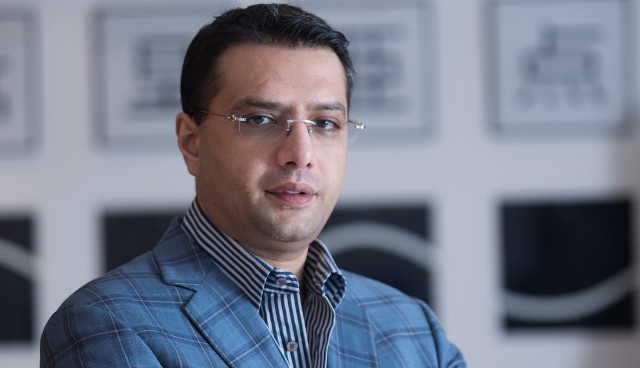
Yusuf Manji (41), a prominent businessman in Tanzania charged with illegal possession of government stamps and bundles of fabric used for making military uniforms, among others, yesterday failed to show up at the Kisutu Resident Magistrate Court in Dar es Salaam on grounds that he was ill
Senior State Attorney, Nasoro Katuga informed the court, before Kisutu Principal Resident Magistrate, Huruma Shaidi that Manji was receiving treatment at Keko Prison Dispensary.
The defence in the case involving Manji and three others appealed for speedy investigation by the prosecution. Manji’s advocate, Mr Hudson Ndusyepo was reacting to the position given by the prosecution regarding the investigation stage into the case.
Manji is charged alongside three officials with Quality Group, Deogratius Kisinda (28), the Human Resources and Administrative Officer; Abdallah Sangey (46), Storekeeper and Thobias Fwele (43), Assistant Storekeeper.
The court was also told that investigations into the case is in the final stages but has not been completed. Magistrate Shaidi adjourned the case to August 4, this year, when it will come for another mention.
It is alleged that on June 30, this year, at Chang’ombe A area in Temeke District, jointly and together, all accused persons were found by a police officer in possession of 35 bundles of fabric used for uniforms of the Tanzania People’s Defence Forces (TPDF), valued at 192.5m/-, which were unlawfully acquired.
Manji and his co accused were also charged with a similar count of being found with eight bundles of the same materials valued at 44m/-, allegedly committed on July 1, this year, at Chang’ombe A area in Temeke District in the city of Dar es Salaam.


Six on Burundi robotics team go missing in US, two seen in Canada

WASHINGTON

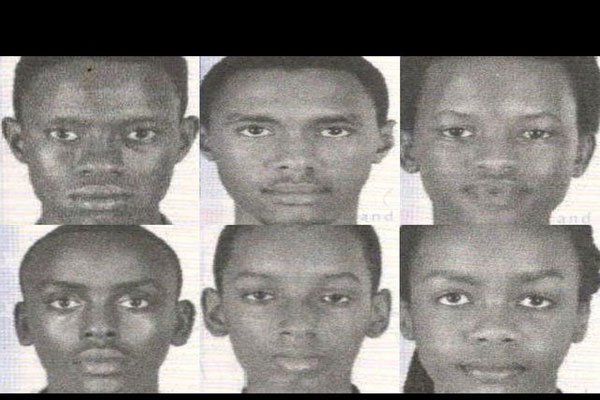
Two of six teens from Burundi who were reported missing in Washington after taking part in an international robotics competition have been seen crossing into Canada, police said Thursday.
Police posted photographs of the six — four young males and two females — who participated in the First Global Challenge robotics meet — on Twitter.
"Two of the individuals were seen crossing over into Canada," said Karimah Bilal, a spokeswoman for police in the US capital.
"We have no indication of foul play," she said.
The Washington Post reported that the other four also were believed to be in safe hands, but Bilal said she had no information about their situation.
First Global said it called police after learning that "the adult mentor of Team Burundi was unable to find the group of six students of the team."
It said it makes sure that all students get to their dormitory at Trinity Washington University after the daily competition.
They "are always to be under close supervision of their adult mentor and are advised not to leave the premises unaccompanied by the mentor," it said.
The international competition drew attention after US President Donald Trump intervened to allow an all-girl robotics team from Afghanistan whose members had been denied US visas to compete.
Burundi has been in the grip of a crisis since President Pierre Nkurunziza's controversial decision in April 2015 to run for a third term in office. He won elections in July that year which were boycotted by the opposition.
Between 500 and 2,000 people have been killed in clashes in the east African country, according to UN and NGO sources. More than 400,000 people have fled and dozens of opposition activists have been forced into exile.

Zanzibar top eight soccer league gains momentum


The Zanzibar Top Eight Premier League continued yesterday with three matches staged at different venues.
Two matches were staged at the Amaan Stadium, with JKU thrashing Kizimbani 3-0 in a one sided encounter, which kicked off at 4pm.
Isihaka Othman Bopa netted the opener four minutes before the break and Khamis Abdallah stretched the lead in the 49th minute through a spot kick. Mbarouk Chande put the score beyond Kizimbani’s reach, when he pumped the third in the 76th minute.
In the second match played at the same venue from7pm, Jang’ombe Boys defeated Jamhuri 1-0 with the only goal netted by Ibrahim Novat after an hour mark.
At the Gombani Stadium in Pemba, Taifa Jang’ombe and Mwenge battled to a 2-2 draw. Following the results, JKU sit top on the log on 15 points, while Jamhuri are second on 13 points, same as Jang’ombe Boys but they are separated on goal difference.

Zimamoto on 11 points are placed fourth, followed by Kizimbani who have collected six points so far. The league continues tomorrow with Jang’ombe Boys taking on Kizimbani at the Amaan Stadium, while JKU will take on Jamhuri at the same venue later on.

Wednesday, July 19, 2017

Despacito breaks global streaming record


Luis Fonsi's Despacito has become the most-streamed song of all time, just six months after it was released.
The hit single has been played 4.6 billion times across all streaming services, overtaking Justin Bieber's Sorry, which previously held the title.
"What's happened with this song is just insane," said Fonsi, who hails from Puerto Rico and sings in Spanish.
"I don't want to use the word accident because I was trying to write a hit, but I didn't plan for it to cross over.
"I just wanted to make people dance."
The 39-year-old said the global success of his song - which has reached number one in 35 countries, including the UK - gave him hope in the current political climate.
"I come from Puerto Rico and I live in Miami. We're living in an interesting time right now when people want to divide us. They want to build walls.
"And for a song to bring people and cultures together, that's what makes me proud."

Despacito is a sun-bleached slice of sensual reggaeton. The title translates as "slowly", referring to the speed of Fonsi's seduction technique.
It hit number one around Latin America when it was released in January, but only caught fire in the English-speaking world after Justin Bieber heard the song in a nightclub and asked to add a verse.
His version of the song - known as Despacito (Remix) - has become a phenomenon on streaming services, most notably Spotify and Apple Music. It is already the fourth most-played video of all time on YouTube, where it is rapidly closing in on the top three, all of which are years old.
The head of Universal Music Group, Sir Lucian Grainge, said the success of Despacito showed how streaming was democratising the music market.
"Streaming has allowed a song with a different beat, from a different culture, in a different language, to become this juggernaut of success and pleasure," he told the BBC.
"The industry has predominantly been English-speaking artists for the last 50 years [but] streaming will continue to open up music from Latin America artists globally.
"Anything and everywhere is up for grabs."
Of course, records will continue to be broken alongside the growth of streaming services - which give users access to a vast library of on-demand music for a monthly fee.
In March, Spotify announced it had attracted 50 million subscribers. Apple Music, which is yet to reach its second birthday, has already attracted 27 million paying customers; while Google Play, Amazon Unlimited, Deezer and YouTube and dozens of others have contributed to Despacito's success.
Critics might point out that the song would never have achieved such visibility without Bieber's contribution, but Sir Lucian was candid about how Universal had harnessed the star's brand power.
"Bringing in Justin Bieber meant that we could take something that was well on its way, and really take it to heights that would have been perceived as unimaginable when the song was written," he told the BBC.
"We were at one level, and he helped us get to the next."
Fonsi also paid tribute to Bieber's contribution, and reflected on his breathtaking success in a phone interview from Lisbon.
Hi Luis! How does it feel to have the most-streamed song in history?
It's been an incredible ride. Pretty much from the start it has just been crazy. Obviously it was a snowball effect. It started first with my more traditional market - the Latin American market. But we had an instant response. I got phone calls congratulating me from people who don't normally call.
Is it a source of pride that Despacito is predominantly a Spanish-language song?
Yeah, that's the beauty behind it. The original version, which I did just with Daddy Yankee, was in Spanish then four months later, Justin Bieber jumps in [and] adds a verse at the beginning in English.
It was his choice to keep the chorus in Spanish - because we had an English lyric for it - but he wanted to stay true to the original version.
Now I'm getting videos from different parts of the world, listening to people trying to nail the Spanish, trying to learn a bit of Spanish through the song.
Have you forgiven Justin for butchering the song when he performed it live? (The singer sang "burrito" and "dorito" instead of the Spanish lyrics)
Yeah, you know, it's not his language. If he was saying he could speak Spanish and he couldn't, I'd be like, "Hey man". But I don't think he's ever come out and said he's a Spanish-speaker. He just wanted to do the song because he loved it. And I think you have to tip your hat to him, because he took the time to phonetically learn the chorus in Spanish.
I know that that takes time [because] I've actually done the song in different languages myself. I've just done the song in Portuguese, and Portuguese is very similar to Spanish, but it was very hard for me to nail that version. And if you were to ask me to sing it now in Portuguese, I wouldn't have a clue where to start!
So I think we just have to let it go.
Why has it become so popular?
This is a question I've been asked a lot but, for some reason, I don't have the perfect answer for it. I think it's the sum of lots of little things.
Obviously, it's a very catchy melody. The way the chorus starts "Des-Pa-Ci-To" is very easy to remember. And it's almost impossible not to move when you hear the track, even if you're not a dancer. And obviously you add Justin Bieber to that, and it brings another angle to all of this.
But I wish I knew exactly what the secret was, so I could apply it to all my future songs!
What is the strangest place you've heard it?
It probably hasn't been anywhere too strange - but you walk into a restaurant, or you're at a traffic light and the car next to you is listening to it… It's just insane! I can't help but smile.
Just today, I heard a Hebrew version of Despacito. Yesterday, I had some friends who were visiting Croatia and it was playing there. People are sending me all kinds of different versions.
Maybe you should edit them together - like Pharrell did with Happy.
Yeah, you know what? I'm compiling a bunch of footage and audio from all the different versions that have been done in all the different languages and I want to edit it together. It's so amazing. It makes me proud that the world's coming together.
I come from Puerto Rico and I live in Miami. We're living in an interesting time right now when people want to divide us, they want to build walls, and for a song to bring people and cultures together, I think that's what makes me proud. Music has that power. It might sound cheesy but I do believe music brings us together.
Did you see that Canadian PM Justin Trudeau put you on his summer playlist?
Oh really, I didn't know that! That guy has good taste!
How can you ever top something like this?
Oh, you don't. This is a once-in-a-lifetime thing. I don't want to be a pessimist about it. I don't want to be negative about it. But my next song, I can't approach it thinking, "How do I beat Despacito?"
Do you really expect to win the lottery twice? We just have to be grateful for what we've done and go forward.
Luis Fonsi was speaking to BBC Music's Kev Geoghegan.